Звиздатые долиныOriginally Posted by zvizda
Звиздатые края
Звиздатые соседи
Звиздатые друзья...


 Re: Звиздужин...
Звиздатые долины
Звиздатые края
Звиздатые соседи
Звиздатые друзья...
Re: Звиздужин...
Вершина... Вершины... Вершины... Облака подо мной... Небо - мое... Солнце - другое... Ветер... Тело чувствует ветер... Мягкая пружинистая альпийская тундра под ногами... Эдельвейсы.... Это другой мир... и я в нем...
Re: Звиздужин...
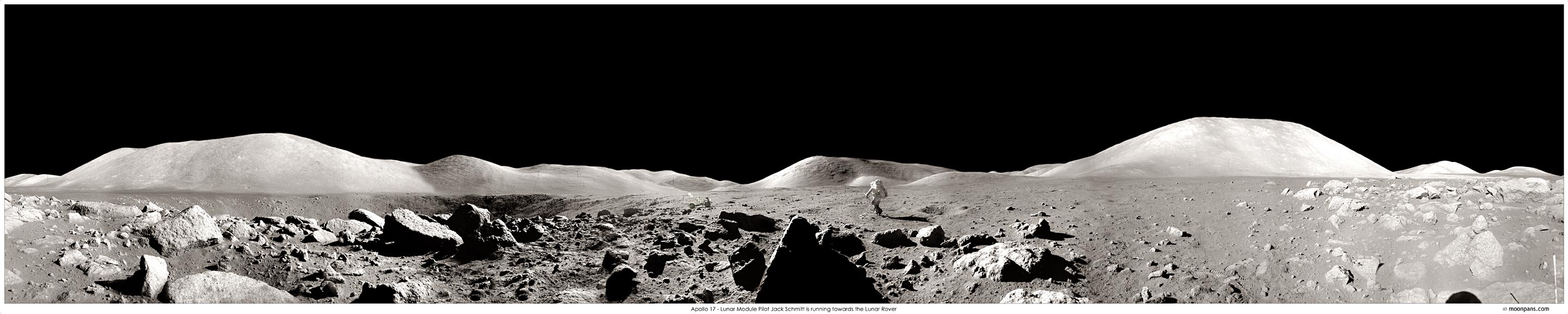
Найди на снимке космонавта!
Explanation: What would it be like to explore the surface of another world? In 1972 during the Apollo 17 mission, astronaut Harrison Schmitt found out first hand. In this case, the world was Earth's own Moon. In this recently compiled panorama of lunar photographs originally taken by astronaut Eugene Cernan, the magnificent desolation of the barren Moon is apparent. Visible above and by scrolling right are lunar rocks in the foreground, lunar mountains in the background, some small craters, a lunar rover, and astronaut Schmidt on his way back to the rover. A few days after this image was taken, humanity left the Moon and has yet to return.
Re: Звиздужин...
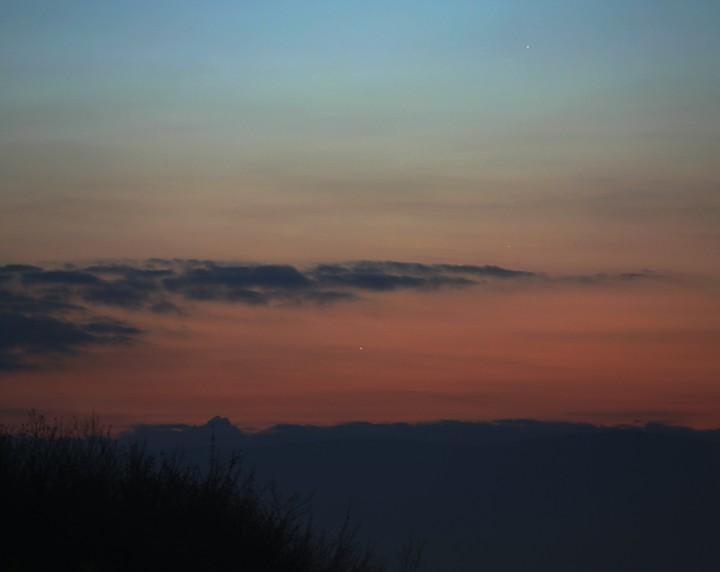
Найди на снимке три планеты!
Re: Звиздужин...
А энту штуковину можно в бинокль увидеть...
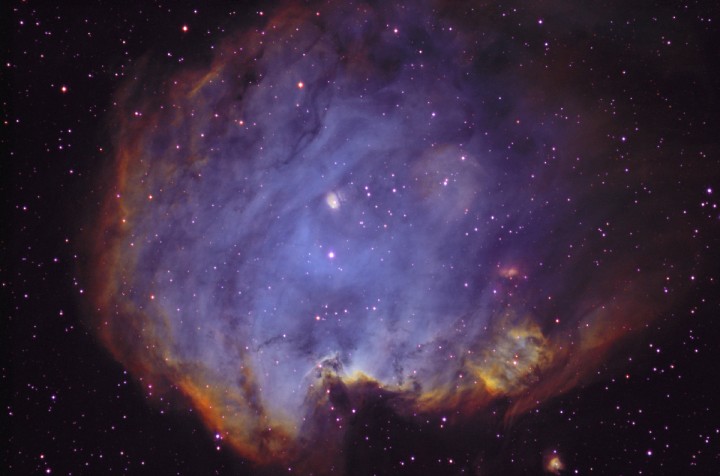
Credit & Copyright: Dan Kowall (Photonhunter.com)
Explanation: A lesser known sight in the nebula-rich constellation Orion, NGC 2174 can be found with binoculars near the head of the celestial hunter. About 6,400 light-years distant, the glowing cosmic cloud surrounds loose clusters of young stars. Covering an area larger than the full Moon on the sky, this stunning narrow band image adopts a typical color mapping of the atomic emission from NGC 2174. The false-color mapping shows otherwise red hydrogen emission in green hues and emphasizes sulfur emission in red and oxygen in blue. Placing your cursor on the image will reveal an alternative image of the nebula made through broad band filters. The broad band image combines filters in a closer analogy to human vision, dominated by the red glow of hydrogen.
Re: Звиздужин...
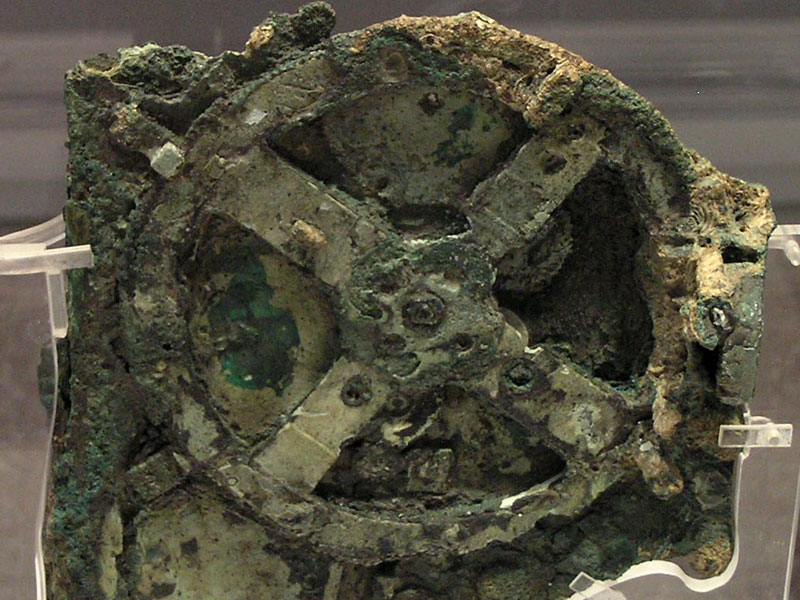
Интересно!
Explanation: What is it? It was found at the bottom of the sea aboard an ancient Greek ship. Its seeming complexity has prompted decades of study, although many of its functions remained unknown. Recent X-rays of the device have now confirmed the nature of the Antikythera mechanism, and discovered several surprising functions. The Antikythera mechanism has been discovered to be a mechanical computer of an accuracy thought impossible in 80 BC, when the ship that carried it sunk. Such sophisticated technology was not thought to be developed by humanity for another 1,000 years. Its wheels and gears create a portable orrery of the sky that predicted star and planet locations as well as lunar and solar eclipses. The Antikythera mechanism, shown above, is 33 centimeters high and similar in size to a large book.
Re: Звиздужин...
На рисунке три квадрата...
Передвинь пять палочек так, чтоб получилось два квадрата....
Last edited by NataliaLA; 12-04-2012 at 06:12 PM.
 Re: Звиздужин...
звиздатые седины
звиздатая клюка
звиздатая чужбина
звиздатая судьба!
 Re: Звиздужин...
ехх вы... трейторы..
/глубоко-вздохнувший, грустный смайлик/:(
а у Вия седни день рождения, сходили бы поздравили:34: :cool:
Re: Звиздужин...
детский сад )) (щя)
один нижний оставляем нетронутым , из оставшихся делаем один бАльшой
There are currently 1 users browsing this thread. (0 members and 1 guests)
 Posting Permissions

|
Terms of Service | Privacy Policy |
 
|